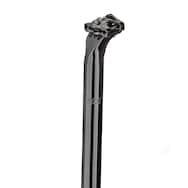
Rose · Race Attack SP-63 XL Seatpost
- £28.30
Rose · Race Attack SP-63 XL Seatpost
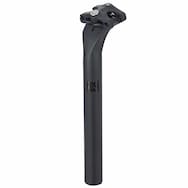
Rose · Race Attack SP-63 S Seatpost
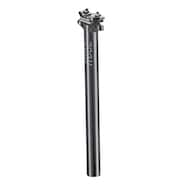
Rose · Race Attack SL-160 carbon seatpost
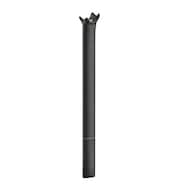
Rose · D-Shape Carbon Seat Post | Zero Offset | 390 mm length
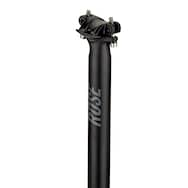
Rose · Race Attack SP-400-A seat post
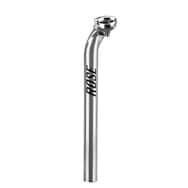
Rose · Pro Double Bolt Racing Seatpost
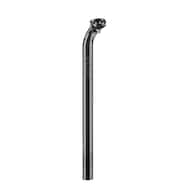
Rose · Pro Double Bolt Seatpost
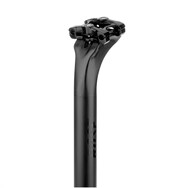
Rose · RC-170 Flex Carbon Seatpost 400mm Matt
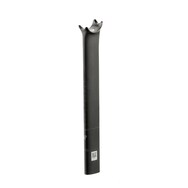
Rose · Shave Aero Carbon Seat Post
Rigid seat posts are the simplest connection between you and your bike frame. They do not offer any damping and are particularly popular if you appreciate a low weight, freedom from maintenance and a fixed riding position, for example on a road bike, hybrid bike or urban bike.
But even if the principle sounds simple: When buying a rigid seat post, there are a few technical details to consider, from the correct diameter to the right clamp for your saddle.
A rigid seat post is a rigid tube – usually made of aluminium or carbon – that is inserted into the seat tube of your bike. It holds the saddle in position and enables the desired seat height. Today, so-called patent seat posts are mainly used, which have an integrated saddle clamp with tilt adjustment. As opposed to suspended versions, it does not absorb shocks and remains unchanged in length. The advantage: maximum stability and a direct connection to the bike.
A plain seat post has a classic, straight design and is inserted directly into the seat tube of the bicycle frame. There is no saddle clamp at the upper end. A separate clamp is attached for this purpose – a clamping device that fixes the saddle to the frame and allows its angle to be adjusted.
This combination used to be widespread and is still used today on older or simpler bicycles. It enables a stable attachment of the saddle, but is often somewhat heavier and less comfortable to use compared to modern seat posts with an integrated clamp.
The material depends on weight, budget and comfort perception:
Carbon seat posts can absorb small impacts through controlled flex – ideal for long-distance riders who prioritise comfort without wanting to rely on suspension.
The seat post must fit exactly into the seat tube of your frame. Common diameters are:
The diameter is often engraved on the old seat post or stated in your bike's manual.
Two dimensions are decisive:
If you need a lot of saddle overhang, choose a longer model. A short post is usually sufficient for small frames, but make sure to observe the minimum insertion depth!
The offset describes how far the clamping head of the seat post is offset. Normally the offset points backwards. However, in special areas of use, such as time trials/triathlons, it can also point clearly forwards. The offset significantly influences the pedalling ergonomics by changing the angle to the crankset and the riding position:
The right choice depends on your physical stature, the frame geometry (as well as the resulting intended use) and the desired riding position. The most common offset values are:
The load capacity of a seat post indicates how much weight it can safely carry without compromising riding safety or durability. Classification is based on different test methods and standards (e.g. DIN EN 17406 & ASTM classification). A distinction is made between two values, among others.
Weight load:
Intended use:
The required load capacity also depends on the bike typeand intended use. For example:
In order to ensure that your saddle sits securely on the seat post, the saddle clamp and saddle rail dimensions must match. Here are the most important terms and tips for choosing:
The seat post clamp fixes the saddle securely in position. It must match the saddle rails, i.e. the rails that connect the saddle to the seat post.
The most common are:
There are also various (sometimes manufacturer-specific) system saddle clamps. Examples include Monolink (Selle Italia) or I-Beam (SDG). These systems require a specially matched saddle/seat post combination and are not compatible with other systems.
Rigid seat posts are particularly suitable for riders who appreciate a direct ride feel and deliberately go without damping. There are different advantages depending on the intended use:
You should remove the seat post and clean the seat tube at regular intervals. Remove old assembly grease (or carbon assembly paste for carbon seat posts) and replace it sparingly to prevent corrosion. Otherwise, seat posts can possibly get stuck in the seat tube – removing them is then only possible with brute force, which can also irreparably damage the frame.
At first glance, rigid seat posts are not a complicated component, but they have to fit the bike, the saddle and the desired riding position exactly. The most important criteria:
With the right choice, the seat post ensures stability, ergonomics and pure riding enjoyment, without any frills.
Seat post diameter
✔ 27.2 / 30.9 / 31.6 / 34.9 mm - must fit the seat tube exactly
Insertion depth & length
✔ Observe minimum & maximum insertion depth – depending on the frame
Offset
✔ Suitable for the desired riding position – depending on the frame geometry and pedalling angle
Saddle clamp & saddle rail compatibility
✔ Suitable for saddle rails (usually 7 mm round rails), with carbon saddle rails often 7 x 9 mm or 7 x 10 mm (highly) oval
Material
✔ Aluminium (robust, inexpensive), carbon (lightweight, vibration-damping)
The diameter is often engraved on the old post (e.g. “Ø27.2”). Alternatively, the data sheet of your frame or a measurement with a calliper will help.
Yes, but only with carbon assembly paste and the correct torque.
Round rails have a uniform cross-section (usually 7 x 7 mm). Oval rails are significantly higher than they are wide (e.g. 7 x 9 mm). If in doubt, take a look at the saddle's technical data sheet.
Too little insertion depth can damage the frame and/or the seat post. In such a case, sudden material failure can lead to serious injuries! Too much insertion is stopped by internal limitations (e.g. with battery frames). Therefore: Check dimensions and follow manufacturer's instructions.